
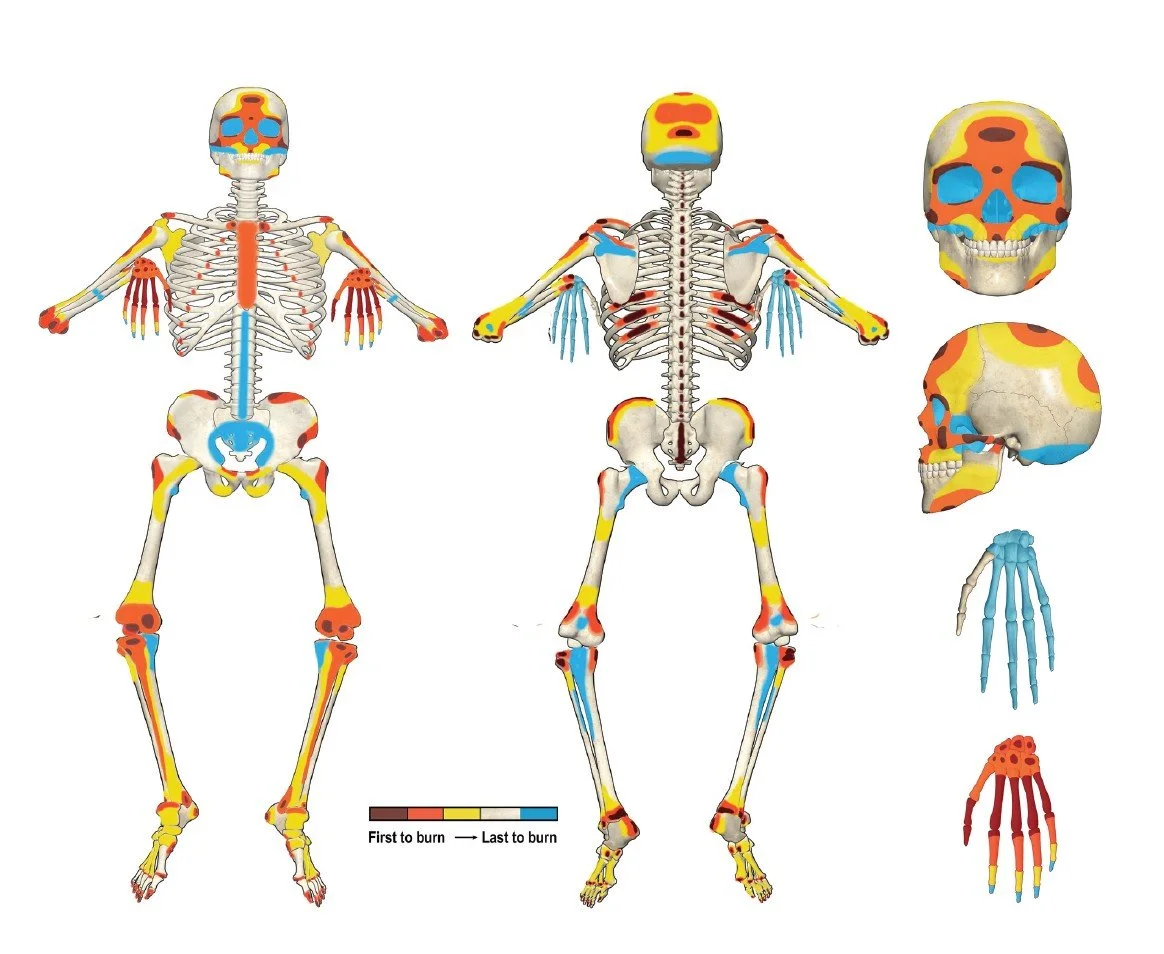
Fire is an oxidation reaction that generates heat and light. There are three requirements in order to make a fire (the so-called ‘fire triangle’): heat, oxygen, and fuel (DeHaan 2002, 2015). Heat involves raising the temperature of an object to the lowest temperature at which it will sustain combustion. The amount of oxygen must be such that can sustain combustion. Finally, the fuel refers to the combustible materials that are present and capable of sustaining the fire. The best ‘fuel’ in the human body is subcutaneous fat (DeHaan and Nurbakhsh 2001). The available amount and interaction of the parts of the fire triangle will determine the duration and intensity of the fire and, therefore, its impact on a body (Devlin and Herrmann 2013).
Fire is an oxidation reaction that generates heat and light. There are three requirements in order to make a fire (the so-called ‘fire triangle’): heat, oxygen, and fuel (DeHaan 2002, 2015). Heat involves raising the temperature of an object to the lowest temperature at which it will sustain combustion. The amount of oxygen must be such that can sustain combustion. Finally, the fuel refers to the combustible materials that are present and capable of sustaining the fire. The best ‘fuel’ in the human body is subcutaneous fat (DeHaan and Nurbakhsh 2001). The available amount and interaction of the parts of the fire triangle will determine the duration and intensity of the fire and, therefore, its impact on a body (Devlin and Herrmann 2013).